2026 Jazz on Hill
PCM presents Jazz on Hill annually, bringing together our local community, students, and faculty to explore and celebrate jazz, and the accomplishments of an esteemed guest artist. This year, PCM featured the ten-time Grammy Nominated John Clayton. Known for his decades-long work as a bassist, composer, and educator, he won a Grammy in 2008 for his work on “I’m Going to Live Til I Die,” arranged for Queen Latifah. Clayton has taught at prestigious universities around the world and is the Founder and Artistic Director of the Vail Jazz Workshop.
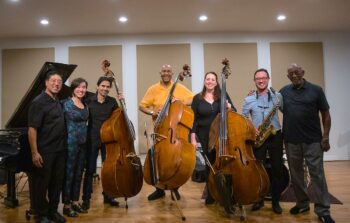
We recently visited with some PCM faculty members about this year’s Jazz on Hill, including Gary Fukushima (piano), Amy Rowe (piano) and our new Jazz Department Chair, Sherry Luchette (bass), learning what their experience was like and some of their highlights.
How would you describe your experience at Jazz on Hill with John?
LUCHETTE: My experience at Jazz on Hill with John Clayton was magical! He is such an incredibly talented musician. He knows how to include everyone in the performance process with his tune choices and is very friendly, warm and engaging with both faculty, students and the audience.
FUKUSHIMA: Having done all but a couple of the Jazz on Hill events, I can say that I’ve relished each and every one that I’ve had the opportunity to be a part of. It’s provided some once-in-a-lifetime opportunities to play with some of my personal heroes and jazz idols, and I’ve felt honored to represent the Conservatory alongside those distinguished guests and in front of so many of the students, parents and patrons of PCM.
ROWE: Jazz on Hill has been an incredible experience from more than one perspective. As the former Jazz Department Chair, it was a wonderful opportunity to learn what it takes to produce an event like this year after year. There are so many moving parts and countless details. As a musician, it’s an honor to share the stage with both our outstanding faculty and world-renowned jazz artists. Every year presents a unique opportunity to collaborate, learn, and make music at the highest level, and that is something I cherish.
What makes Jazz on Hill unique?
FUKUSHIMA: For me, the chance to not only perform with our guest artists, but also with my amazing colleagues. I am also always blown away by the large audiences that Jazz on Hill seems to attract.
ROWE: The master class for Jazz on Hill is unique because it’s an immersive experience that combines learning and performance. Students have the opportunity to work directly with the guest artist during the master class and then perform in the concert afterward. They also get to watch their instructors perform with the guest artist, which reinforces that jazz is built on collaboration. It’s rare to have so many members of the jazz department together in one place, so Jazz on Hill is an inspiring event that students can’t experience in a traditional classroom setting.
How did you prepare your students for Jazz on Hill?
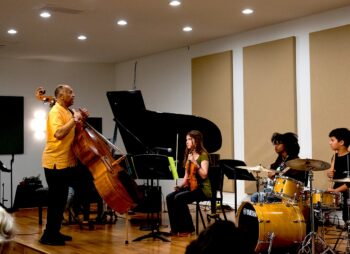
LUCHETTE: I teach a bass group class at PCM for some of my bass students, and since a bass player was coming as our Jazz on Hill guest artist, the bass group class prepared some pieces to play for John. It was really fun to be able to include some classical players as well as jazz players.
Were there any moments that felt like your students had an “AHA!” moment during the master class or performance?
ROWE: 100%! During John’s master class, there were several moments when he emphasized things like the importance of listening to each other, awareness, and getting out of one’s head and the audience could immediately hear a big difference in the students’ playing. Those moments are powerful because they demonstrate that jazz isn’t just about “playing the right notes” and it’s more about communicating, listening, and telling a story together.
What pieces were on this year’s program?
ROWE: The program featured a variety of jazz standards and selections that highlighted all of the faculty while showcasing John’s incredible artistry. The bass trio (three bassists!) was a treat because they played “F.S.R” by Ray Brown and it’s not often that we get to see three bassists play together! We also played a few songs that pay homage to faculty member Roy McCurdy (drums) and his musical history; these included “Teaneck” from the Cannonball Adderley book and “Along Came Betty” by Benny Golson.
Other pieces on the program included: “Easy Does It” by Sy Oliver and James “Trummy” Young, “You Don’t Know What Love Is” by Gene De Paul and Don Raye, and “Unit Seven” by Sam Jones.
Did you have a favorite piece that was played?
ROWE: My favorite was getting to play “Easy Does It” as a trio with John Clayton and Roy McCurdy. This is one of the tunes that made me fall in love with jazz about 20 years ago, so having the opportunity to perform it with two living legends was the icing on the cake. It’s hard to describe what it feels like to be so musically supported while also experiencing a piece of jazz history in real time. It’s a moment I’ll always treasure!
How did you feel getting to play alongside John?
FUKUSHIMA: It was a blast and an honor that I will never forget. He is a true jazz master and an exceptional bassist. Playing “You Don’t Know What Love Is” with both John Clayton and Roy McCurdy was a highlight for me.
ROWE: Playing with John Clayton was both inspiring and humbling. He has such a deep musical presence that he elevates everyone around him. His artistry, generosity, and genuine love for making music create an environment where everyone feels encouraged to give their best. It’s a privilege to share the stage with someone of his caliber.
What has been your favorite moment with John Clayton?
LUCHETTE: My favorite experience with John Clayton was playing in the bass trio with John and Ahmet Türkmenoğlu (who is also on faculty at PCM). We played the tune “FSR,” written by Sonny Rollins. I love being able to play in that formation, and also getting a chance to solo and hear both John and Ahmet solo, too. It was super fun!
AR: What stands out most is John’s generosity as a musician. Despite his incredible accomplishments, he makes every student and every musician feel seen and valued. He has a remarkable ability to communicate complex musical ideas in a way that is accessible, encouraging, and inspiring… and always full of joy!
What is something unexpected you learned from working with John?
LUCHETTE: What I learned is that he has huge ears and is always listening and observing, more than I realized!
AR: One thing that really stood out to me was John’s ability to make everyone in the room feel genuinely welcomed and cared for. For educators, it’s easy to focus on technique, harmony, or improvisational vocabulary, but John consistently brought the conversation back to the fundamentals of being a thoughtful human, which translates into musicianship (like listening, being aware, and thinking beyond oneself).
FUKUSHIMA: I got to interview John for DownBeat Magazine a number of years ago, along with his son, pianist Gerald Clayton. When I asked him when he realized that his son would be a successful jazz musician, he replied, “I never thought that.”’ But he clarified that he meant he had no preordained expectations for his son to follow in his footsteps, that he would honor and respect his wishes to do whatever he wanted. Gerald, of course, has become one of the finest jazz pianists of his generation.
Why should someone who has never come to Jazz on Hill come next year?
ROWE: Jazz on Hill offers something for everyone, from lifelong jazz fans to people hearing live jazz for the very first time. It’s a chance to experience world-class guest artists alongside our exceptional faculty and talented students in a setting where learning and performance come together. Audience members will hear incredible music and see the collaborative spirit that makes jazz such a special art form. Jazz on Hill is an event that celebrates community and the joy of making music together.
LUCHETTE: Students should come to the program because it’s fun and a great way to connect with others in a positive environment. I encourage anyone who has any interest in jazz to check out various jazz combos that play at PCM year-round. We have many playing opportunities for both youth and adults, and it’s a very welcoming community. Even if you have only a small amount of jazz experience, you can still come to PCM and find other students who want to learn about jazz, connect with them, and have a really wonderful time.
FUKUSHIMA: To quote John’s son, Gerald, “We should stop ’should-ing’ others. But I know that anyone who decides to attend Jazz on Hill will receive an entertaining and superior jazz experience that is unparalleled among any non-collegiate institution that I can think of.
Watch the entire Jazz on Hill 2026 program.
Are you or anyone you know interested in learning more about PCM’s Jazz Department, taking lessons with our esteemed faculty members, or joining a youth or adult combo? Please email us at music@pasadenaconservatory.org fill out our inquiry form online. We hope to see you on campus soon!