PCM’s New Jazz Department Chair Sherry Luchette
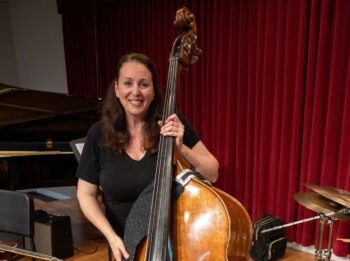
Sherry Luchette, PCM’s new Jazz department chair is an accomplished musician and teacher who has dedicated over ten years to various departments at PCM. In this interview she reflects on her journey and how being a part of PCM has been meaningful to her as she takes on her new role.
How did you get into playing Jazz?
Like a lot of bass players, I was a bit of a late starter. I played by ear and I always was in band, but I never had formal training, I just would pick things up by ear and teach myself various instruments. I got to the bass when I was about 14 or 15, I really fell in love with the sound, and it was an electric bass first, and I taught myself how to read and play, and started doing musicals and shows around town.
In my senior year of high school I found a teacher at a local university, and it turned out that he was a jazz player, but he had also been classically trained with a member from the Cleveland Orchestra, and he had been on the road with the Woody Herman Band, and had now settled in this little town called Youngstown, Ohio. He was head of the jazz department at a university, and the bass teacher, so I ended up going to him for some lessons on electric bass. He first showed me how to walk bass lines through chord changes, that was our first couple of private lessons, and then he asked me if I was interested in playing the upright bass. I was like,“Yeah, it’s only my dream to do it,” but I just didn’t have any formal training. I didn’t think I could go to music school, because I was far behind, and he said, “Well, I will take you, we’ll start you in college early, and I’ll give you a bass from the university, and we’ll start with Book One, Samandal Book One, and no jazz for two years, only classical.”
So, I started when I was 17, and I took lessons pretty much straight for six years, classical lessons straight through, and then after two years I was involved with the jazz department as well.
How did you become a music teacher?
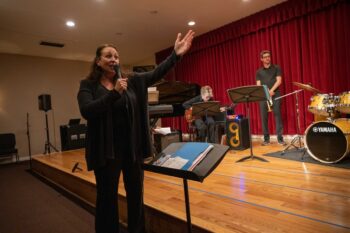
My teacher suggested that I get my teaching certification, and I didn’t want to do it at the time. I wanted to go to New York and just be a jazz bass player. I ended up getting my certification for K through 12 teaching in Ohio. I moved back to Cleveland, and I rented a room and began freelancing, and it was tough just to play, even with just one person and nothing else. I was hustling, and I was playing a lot of gigs, doing a lot of rehearsals. Then I substitute taught because I had my certification in public school. I did this combination of things for quite some time while I was in Cleveland, and then went back and got a master’s degree in classical performance.
A couple months later, someone reached out to me from the Buckley School, which is a private independent school in Sherman Oaks, CA. They needed an elementary music teacher, and they wanted me to come out for an interview. So I came back to LA, I interviewed for two days, and I got it.
What brought you to PCM?
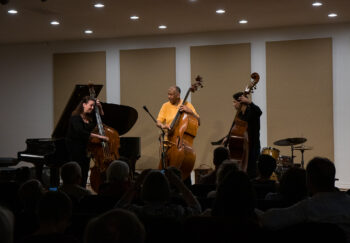
In 2012 PCM formed a jazz department, and I was brought in as the bass instructor. So, I was part of the first wave of crew. I think the only other person on staff right now that’s been here as long as me, is Gary Fukushima. I was part time for most of those years, as with most of the staff here. With the teachers, they’re usually part-time, along with other things they’re doing. In the past year or two, I’ve come full time. That’s fairly new, but I’m doing a number of things. Suzuki bass, so I have a lot of bass students, I’m in the young musicians department, I’m in the string department, I’m in the jazz department, and adult studies, and in 2018 we started adult jazz combos and that’s grown quite a bit.
What are your highlights from teaching at PCM?
Watching the growth of the programs is really inspiring, because there’ve been some pretty hard hits that have happened in this area, like the pandemic, and the fact that we’re able to keep growing is great. I’ve seen nothing but growth here since, and seeing that means more people interested in signing up, people reaching out and wanting to get instruction, wanting to play with others, wanting to learn. I like that there’s a place you can come where people are serious about music, where it’s not placed down low. The bar is high here. I like watching the students and the programs grow.
Also, in the YM department with the little kids, it’s always fun when they’re so happy to see you. That camaraderie and that inspiration of people really wanting to learn — you’re there to try and deliver it the best that you can. That’s a great feeling. And it doesn’t happen often enough, but it does here.
What are you looking forward to as the new head of the Jazz Department?
Watching things grow and become an even more well-oiled machine. That could mean more instructors bringing in more students recruiting. I’m really big and into that, and I know I’ve been pretty successful at making that happen, and that’s a big part of how a program is built, getting the word out amongst the community, and a little beyond that. What I mean when I say a well-oiled machine for the department, is having regular opportunities for the students to perform, something that they can look forward to on a yearly basis. There are still some things we’re trying, so we’ll get that to the point where it’s a nice template. Also, creating as many opportunities for the faculty as you can to earn money, either through teaching or through performing and recruiting. I’d like to see the education part of things really grow, through outreach, from the younger ages all the way up, offering instruction or exposure to jazz.
What can we look forward to in the future with the Jazz department?
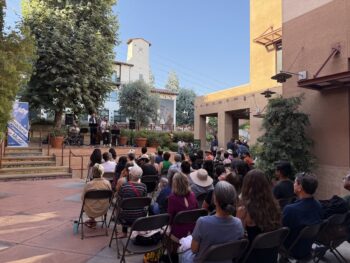
This summer there are quite a few performances going on at Vroman’s Bookstore in Pasadena. There’s going to be jazz performances happening there, one of them on the 27th of June. They’ve invited some of the PCM students to come and sit in, with faculty, so that’s really cool. Another thing is that there is going to be some recruitment-like concerts going on where we go into schools — high schools, middle schools, elementary schools — and work with the students this year, or give them an assembly performance, and there’s an assembly performance for younger kids in July. There’s going to be one for the Boys and Girls Club, so there’s there’s some cool things, like, ‘Hey, we’re coming to you,’ and then we’re going to try to get some kids here, and let the instructors work with them to see if we can inspire them to get a little bit more involved with playing jazz.