Kamran Kurlin
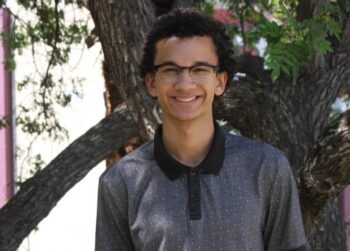
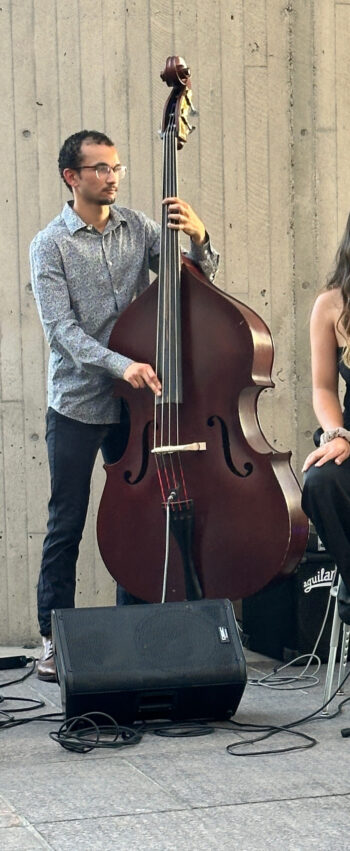
Kamran Curlin graduated from PCM in 2018 and went on to pursue music performance at Oberlin Conservatory. He’s now back in Los Angeles and has hit the ground running — whether performing, attending jam sessions, transcribing songs, or going to live shows. In this interview, Kamran shared his journey after PCM and how he approaches music.
This interview was conducted on August 5, 2025.
What are you currently working on?
I recently moved back from Philadelphia, about a month ago. I’m still keeping with my usual practice routine and doing a lot of transcribing. I’ve also been learning the electric bass more and upgrading my gear. Something that I’ve been really focused on doing is going out and meeting a lot of people — playing a lot of jam sessions, working on other people’s music, and collaborating with vocalists. I’m just hitting the ground running. I’ve already had a few really cool gigs, but I’m trying to keep my evenings full and get my feelers out.
Have you always known that you wanted to pursue a music career?
No, not at all. I grew up playing music since my mom is a musician, a flutist; and I have three siblings who were all forced to play music, but I was the only one who ended up pursuing music in college and who wanted to make a career out of it. I think PCM was super important for me in coming to that realization, by getting the exposure to a great faculty, great teachers, and amazing playing opportunities. It was great to go out to Pasadena once a week and meet other musicians my age from all over Southern California. That was a cool experience for me, because I had no idea that other people my age from all these areas were also interested in the music I liked.
Have you always played the bass?
I started on piano. For me, at a young age, it was like, honestly, all hate. Like, I hated piano. It was so hard for me, and I couldn’t figure out the two-handed coordination, so it was a dead end for me.
Then I switched to trombone afterwards, but I didn’t like wind instruments because I would have to spit into the instrument, and it felt like the grossest thing ever. So, because I like playing in bass clef, I switched to the bass after trombone.
The bass really clicked. As soon as I played my first couple of lessons, I knew that I liked the instrument and wanted to get a good sound out of it. The first thing that stood out to me was the sound. I heard my teacher play, and I had never heard a sound that deep, so it blew me away. As I played in ensembles, I enjoyed the role the bass plays, and when I went to college, I was able to study great bass players, and my mind was opened to the possibilities of the instrument.
Did your experience at PCM prepare you for the academic and musical demands of studying at Oberlin?
Oh, definitely. Especially the seriousness and professionalism that were stressed in the big bands and combos. The teachers made their expectations clear: you must have your music, binder, and everything else you need for rehearsals, including showing up early and looking professional. This helped prepare me for a conservatory setting in college because it gave a taste of what a higher-level conservatory expects. And while the standards were high, it was still fun because I was meeting new people and making music with them, so we eventually became friends. My experience at PCM fostered a taste of a college music environment in a way that was also fun. I looked forward to every single Friday when I would go to Pasadena for my classes.
What are some of your goals right now as a musician?
My goals are to keep pushing the possibilities of what the bass can do. It would also be nice to eventually, someday, teach other bass players, imparting what I’ve been taught to other musicians. It would also be nice to reimagine what the luminaries of the past have played and put it into a new light. I’m trying to broaden my horizons, and electric bass is great for that because it opens the door to so many more genres of music that I’m just now starting to get into.
So, my goals are to constantly be pursuing something greater, something beyond what I can currently do, and to share that with others in a new light that’s honest and truthful. Also, life is short, so it’d be nice to have fun while doing it all. I don’t have a huge goal, but I’d love to play with the other great musicians and learn from my friends. If that means that we get to play cool venues and go on tour, then that’s great.
Are there any artists that you’re especially interested in?
I’ve been listening to a lot of Nancy Wilson, which has been cool.
And the other day, I was checking out multiple versions of “Stardust,” from John Coltrane’s version and his collaboration with Johnny Hartman, to Nat King Cole’s vocal rendition, and also Oscar Pettiford’s version, where he takes a very soloistic interpretation.
What advice would you give students who are considering studying music in college and pursuing a music career?
Honestly, I would say, have at least one or two other things going on in your life that you love as much as music, but have nothing to do with music. For me, it’s reading and playing soccer. I find that if I’m committed to other hobbies, it helps my practice because it keeps me balanced. Music can be such an arduous endeavor because your whole self is involved in the production of that art form, so it’s good to balance it with other unrelated things. It can be anything, like cooking, writing, fashion, or even creating content on TikTok, if that’s your cup of Joe. But really, having one or two other things will help you with the stress that comes with music, and it also helps your playing because being a well-rounded person will help with your artistry, and that shows in your sound.
Is there anything else you would like to share?
PCM is awesome. My formative years were there, and it’s a great program with great people. I highly recommend it if you’re wanting to get to the next level and also be around other musicians from other parts of Southern California, who are equally as in love with music as you are, and want to build a community.